

The one thing every family should know: jiu-jitsu is learned as a chain. Get the fight to the ground, get past the opponent's legs, hold a strong position, and only then try to finish with a choke or a joint lock. Beginners spend much of their time on escapes and safe positions. Which finishing holds a student may use depends on age and belt: children are not allowed most chokes and leg locks in competition, and the most dangerous leg locks are kept for adult brown and black belts. 2,43 The positions and the finishing holds have their own page; this one is about the moves between them.
The big idea
The IBJJF rulebook describes a match as "a progression of positions of technical control that ultimately result in a submission hold". 43 Its points table works as a map: 2 points for a , a or ; 3 for a ; 4 for or . A position must be held for three seconds to score, and points add up through a chain, so a pass then a mount is 7. 43 Players often compare it to chess played with the body, with the final as checkmate. 1
Tapping, the , patting the partner, the mat or yourself, or saying stop, ends the hold at once. It is how every student stays safe. 43,86
The first movements
Two movements appear in the very first lessons: the , or shrimp, sliding the hips out along the mat to make space, which an Alliance academy calls the most important movement you will ever learn; and the trap and roll, bridging to roll an opponent off from mount, the first lesson of Gracie Combatives 2.0. 102,106 UKBJJA guidance says learning to roll and must be part of every beginner's introduction. 86 Many instructors think a white belt's training should stress escapes and defence, because beginners often find themselves underneath. 2
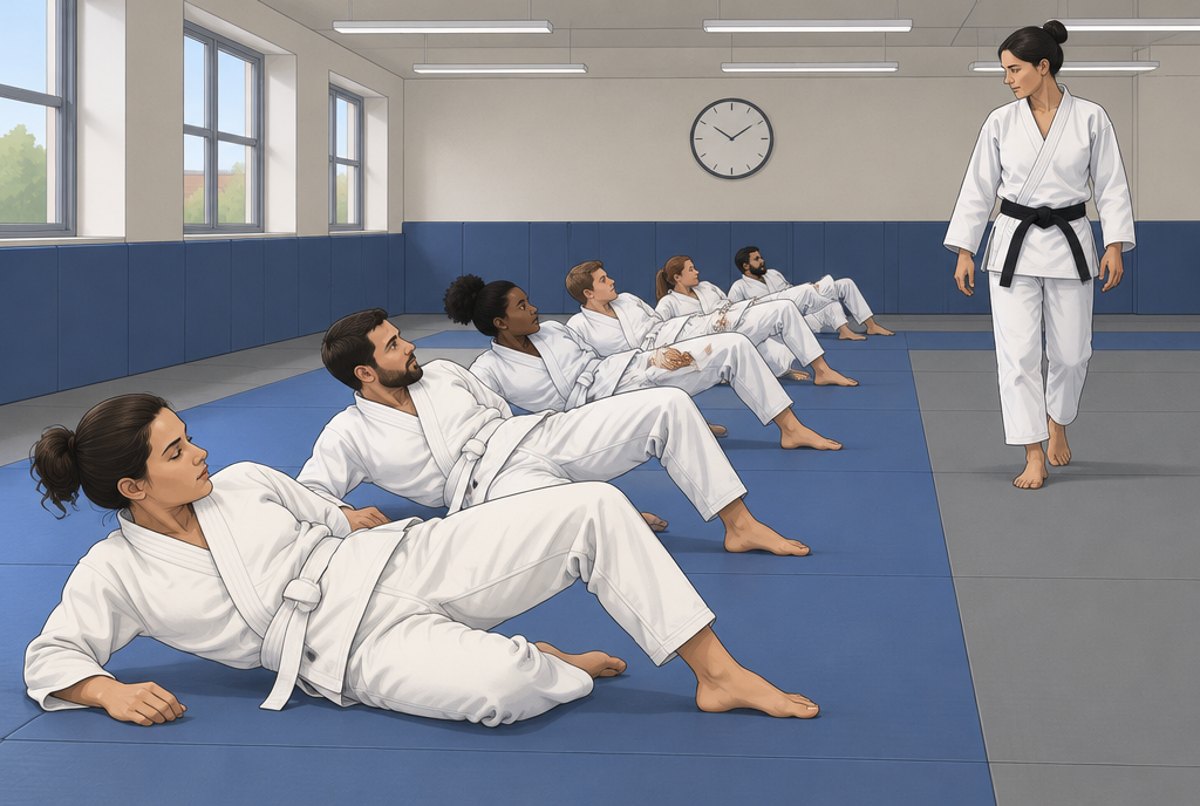
Getting to the ground
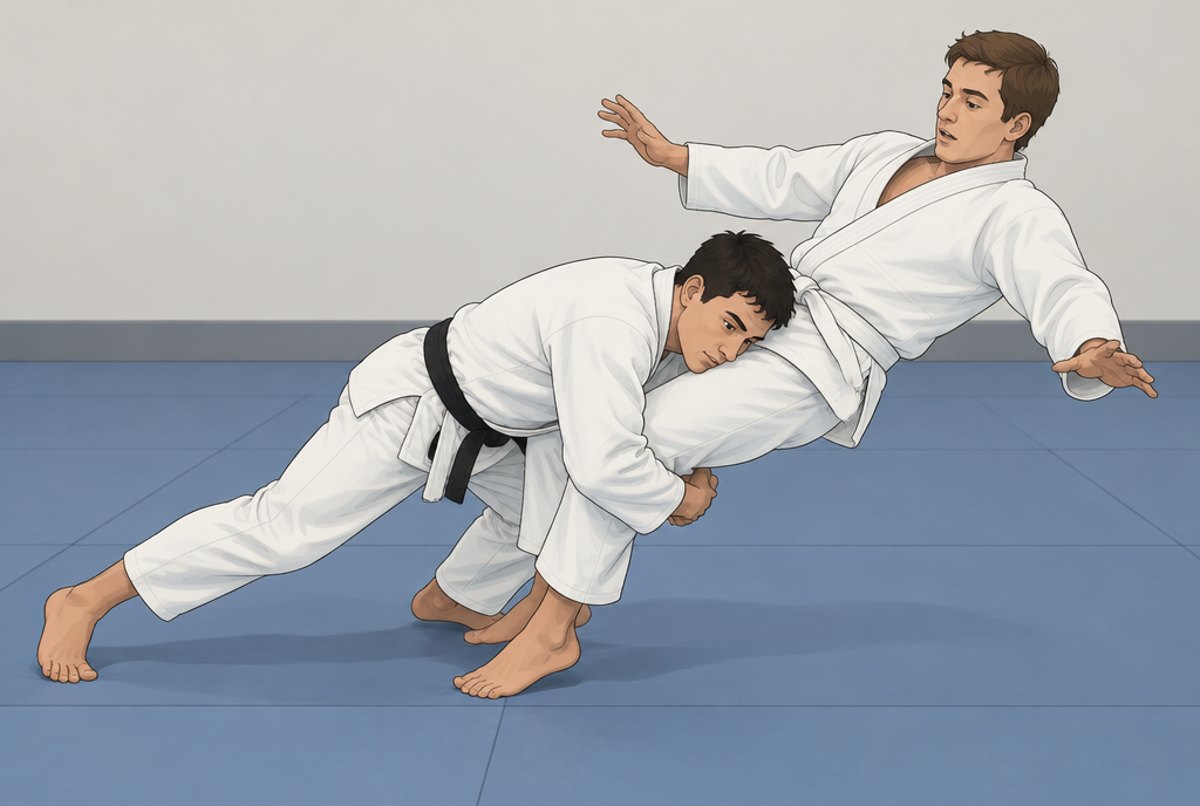
- Takedowns. Jiu-jitsu allows the throws of judo and the leg attacks of wrestling. A common one is the , in Brazilian slang , which Royce Gracie used in his first UFC fight; the attacks one leg. 9,22 A takedown scores 2 points at IBJJF events when the attacker starts with both feet on the mat and holds the top position for three seconds. 43
- Pulling guard. Jiu-jitsu has a move other sports lack: sitting down to bring the opponent into your guard, . IBJJF rules allow it with a grip on the opponent; pulling guard without a grip is a foul. 1,43 ADCC gives a minus point for it. 60
- Jumping guard, , jumping to wrap the legs round a standing opponent, is a foul for everyone under 15 and for all white belts at IBJJF events, for safety. The JJIF has the same rule for under 16s and white belts. 43,65
- Banned takedowns in every IBJJF division include a , the scissor takedown and suplexes that drive the head into the mat. 43
Sweeps and guard passes
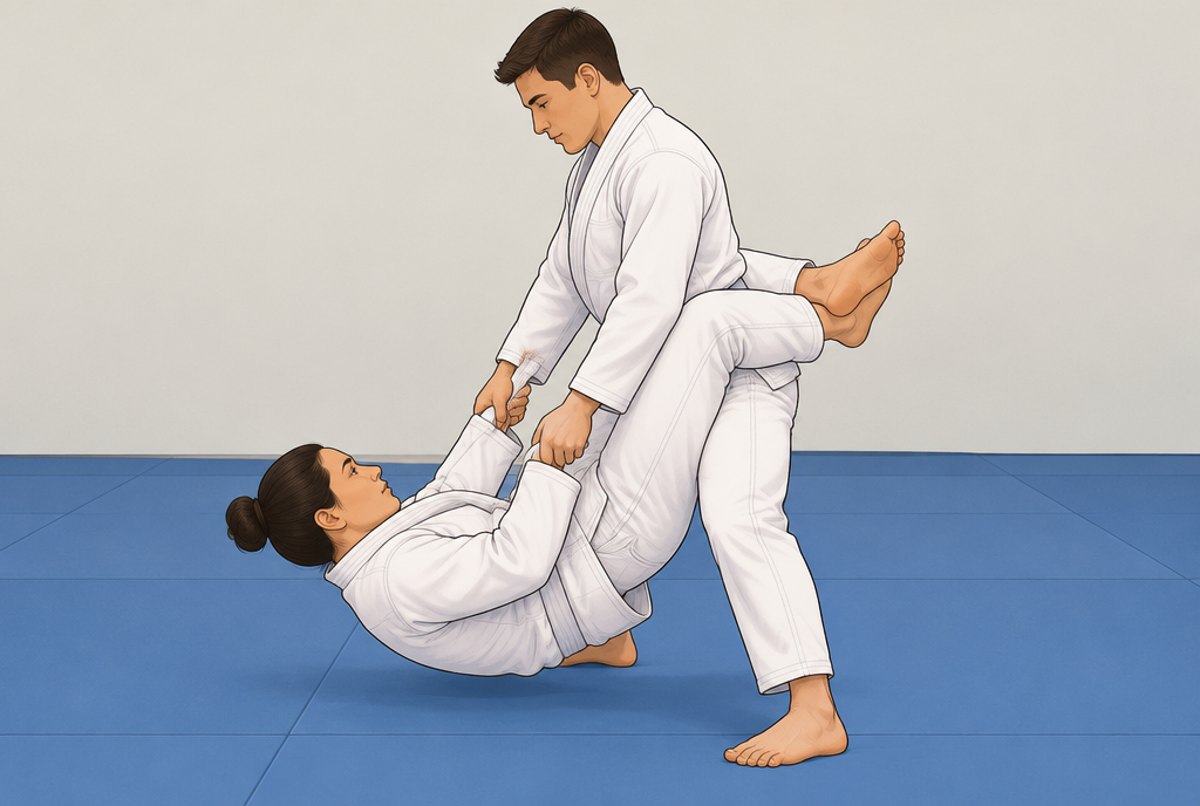
- A sweep turns the bottom person in guard into the top person: 2 points. Early ones include the scissor sweep and the tripod sweep, both taught in Gracie Barra's fundamentals videos. 43,100
- A guard pass is getting past the legs of a person playing guard to or north south, a pin lying head to head, and holding it: 3 points. Opening a closed guard, often by standing up, is usually the first step. 43,100
A rough order of learning
No organisation publishes a single syllabus. This order follows what is legal at each level in IBJJF competition, plus the beginner programmes the teams publish. It is a guide, not any academy's curriculum. 43,100,102,106
| Stage | Typically learned | Sources |
|---|---|---|
| First months, white belt | Breakfalls, hip escape, trap and roll; closed guard; mount, side control and the back; basic sweeps; , , , , , . Gracie University's beginner course has 36 techniques built around self-defence | 2,86,100,106 |
| Blue and purple belt | Open guards, more sweeps and passes; wrist locks and the in competition; more gi chokes | 1,43 |
| Brown and black belt | s, s and s allowed in gi competition; in adult no gi at IBJJF events, s and | 1,43 |
Gracie Barra moves students from GB1 Fundamentals to GB2, with live sparring and no gi, after three white belt stripes, usually at least four months; Alliance beginners do 60 classes of drilling without sparring first. 100,102
Gi and no gi
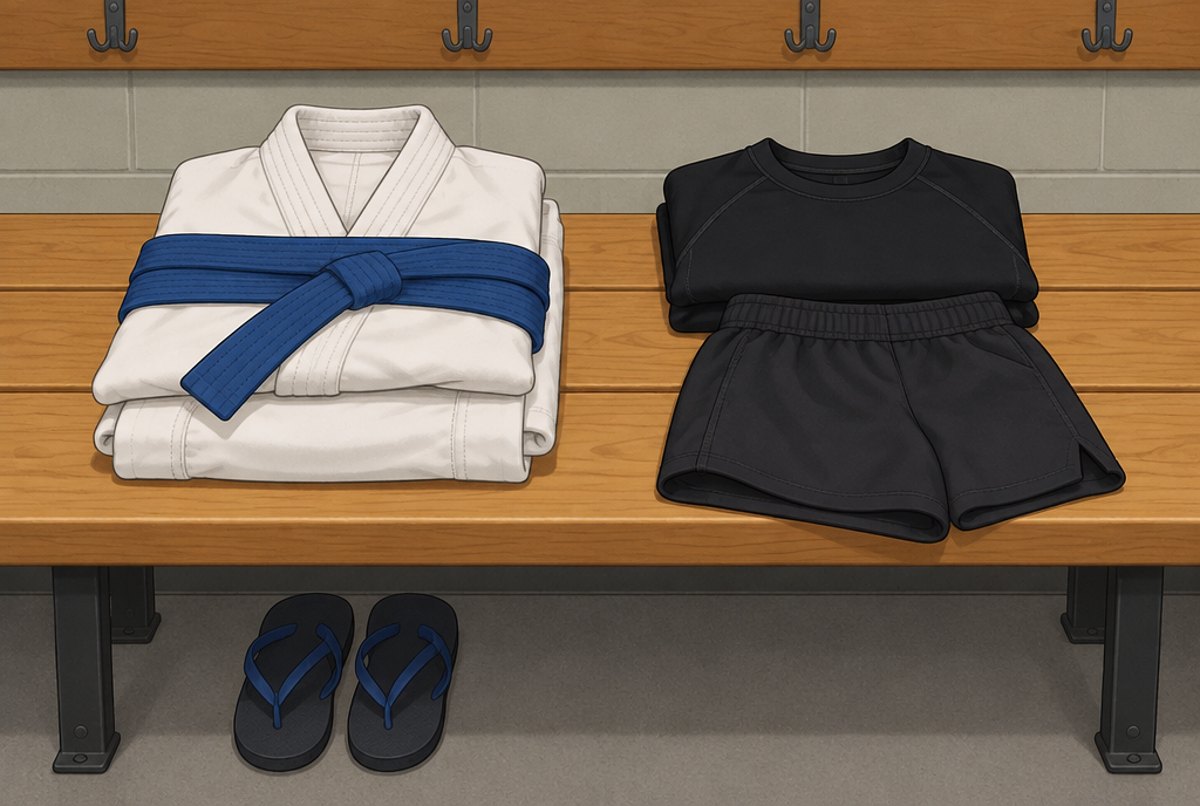
- Gi classes use a jacket, trousers and belt, similar to a judo uniform but usually lighter and more closely fitted; the cloth can be gripped and used for chokes. At IBJJF events the must be white, royal blue or black. 1,23,43
- No gi classes use a , a tight stretch shirt, and shorts, with no gripping of clothing under IBJJF rules. 1,43 ADCC, the best known championship, allows a gi as optional but is mostly fought without one. 60
- Traditionally a belt promotion needed a gi; today more academies promote students who train only without one, and 10th Planet teaches only no gi. 1,16
A note for families: reading about a technique is for understanding it. Takedowns, locks and chokes are learned from an instructor, on a mat, with a partner who can tap.