

Jiu-jitsu has no set forms. Where karate has kata and taekwondo has patterns, jiu-jitsu has a map of positions, and the IBJJF's points table is the clearest drawing of it: the better the position, the more it scores. 43 Here are the positions, then the two families of finishing holds, then which holds are banned by age and belt under each rule maker, with every rule dated. 43,50,60,65
Positions
| Position | What it is | Notes | Sources |
|---|---|---|---|
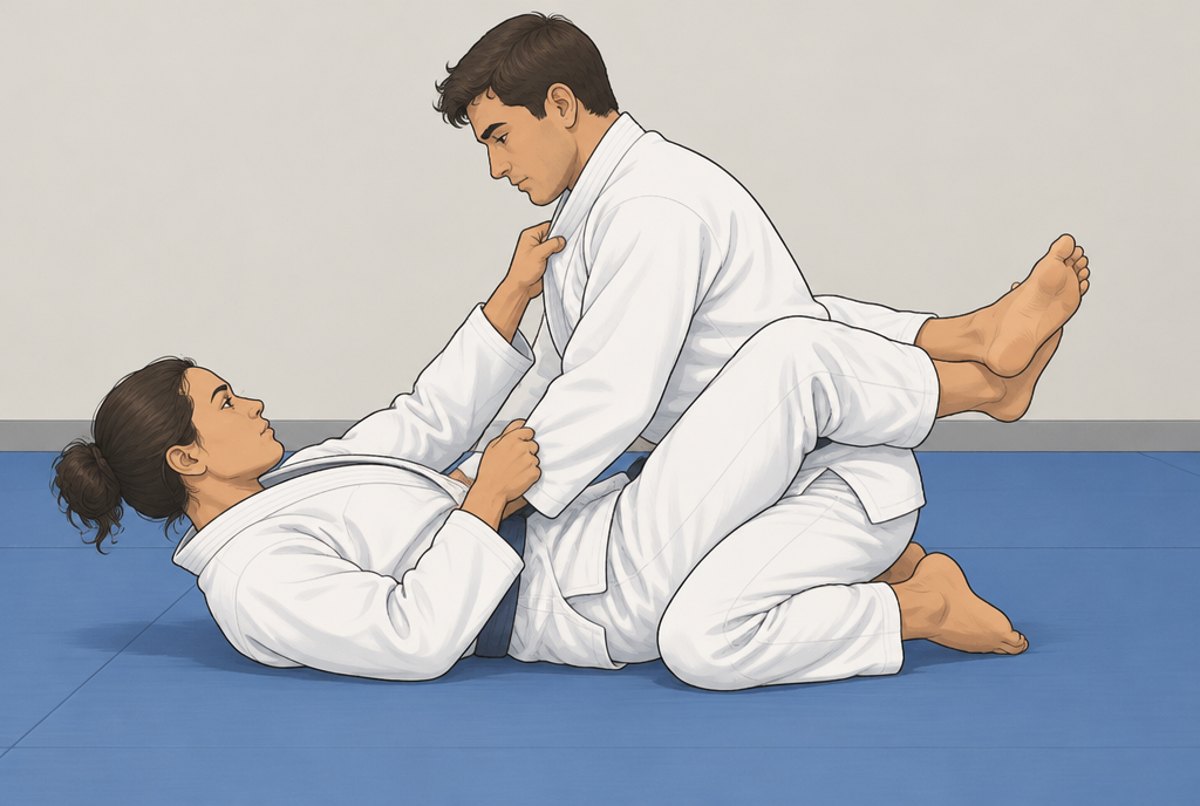
| The person underneath, on their back or side, uses one or both legs to stop the top person getting round to their side. A position to attack from, not only to defend | In jiu-jitsu, unlike most combat sports, being on your back in guard is not automatically a disadvantage | 1,22,43,66 | |
| The legs are locked around the top person's waist, ankles crossed | Many first sweeps and submissions start here | 1,22 | |
| Legs not locked; feet and legs push, pull and hook. Named versions include butterfly, spider, De La Riva, after Ricardo De La Riva, X guard and others | There are many named open guards | 1,22 | |
| The bottom person traps one of the top person's legs | Deep half guard and 50/50 are variants; the IBJJF has a stalling rule for lapel or belt grips in 50/50 | 1,22,43 | |
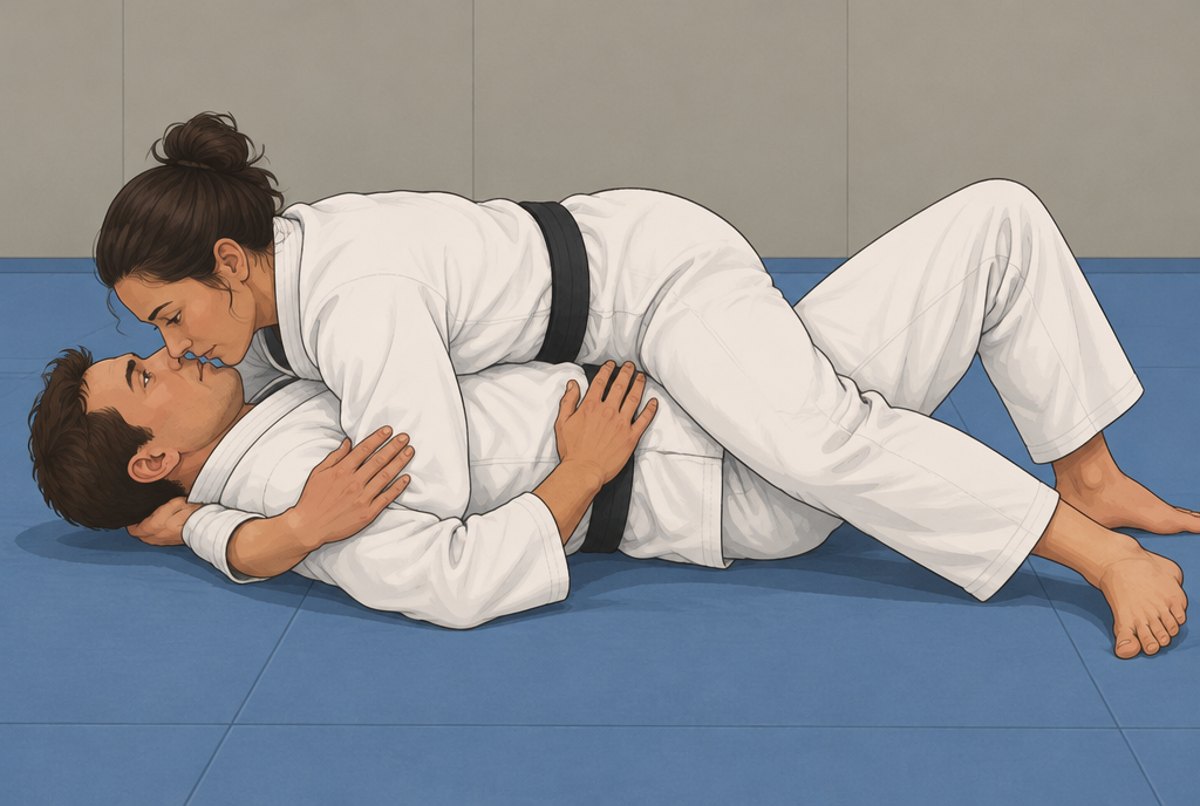
| , in Portuguese , "a hundred kilos" | Top person lies across the chest from the side, past the legs | North south, head to head, is a related pin. Getting here from guard scores a guard pass | 1,22,43 |
| Top person puts a knee or shin across the belly, chest or ribs, the other leg off the mat | A mobile, uncomfortable pin; 2 points at IBJJF events | 1,22,43 | |
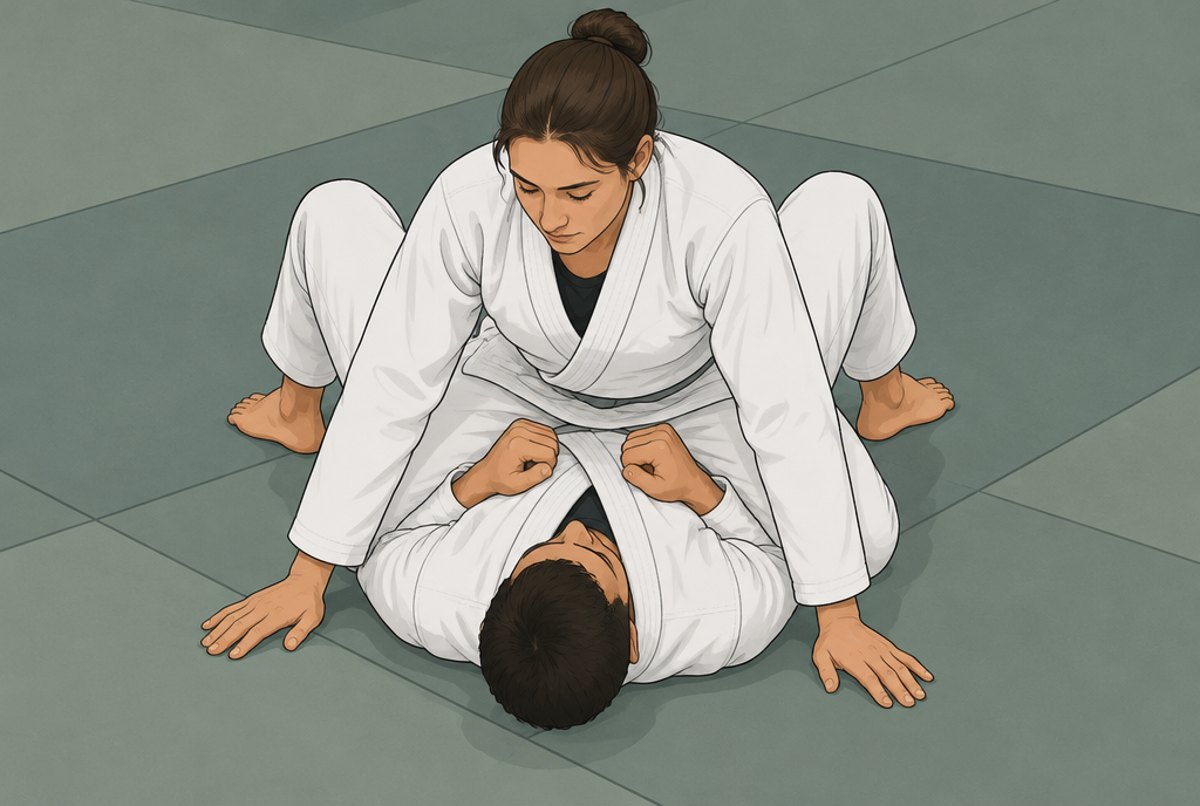
| Top person sits astride the opponent's chest, knees on the mat | There are several variants; 4 points | 1,22,43 | |
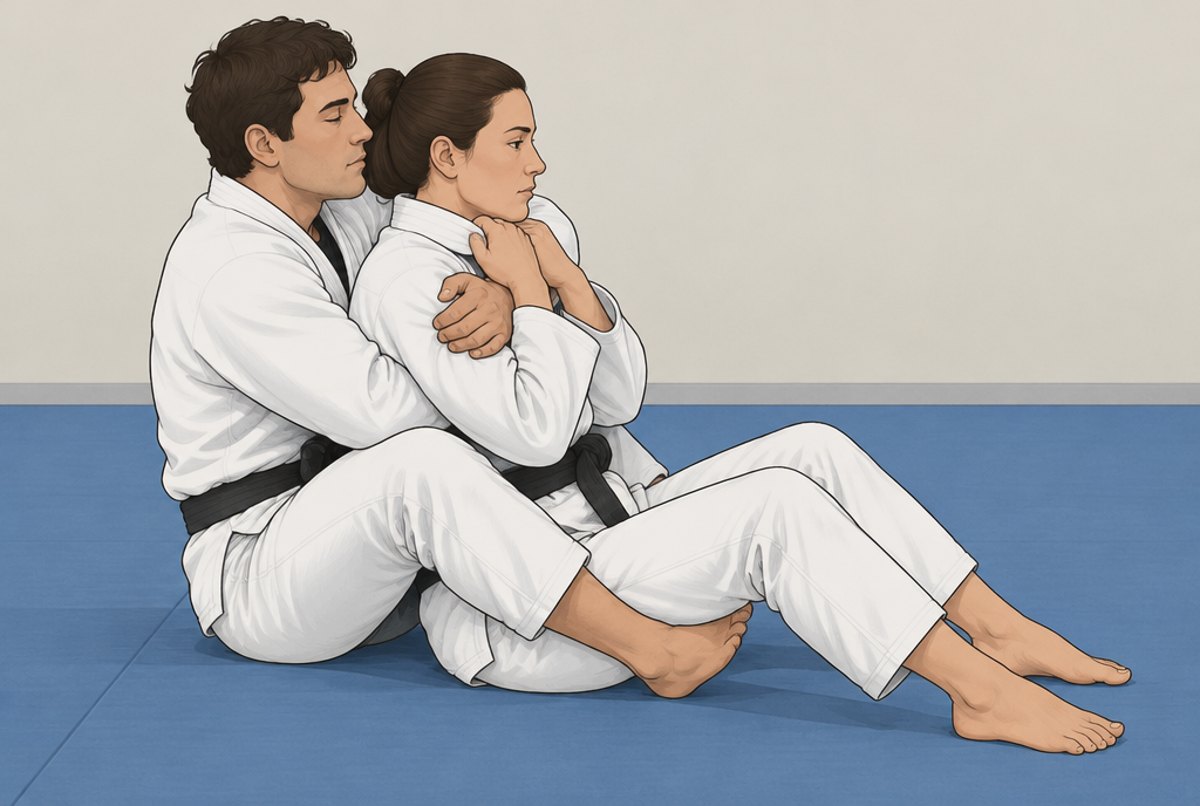
| Behind the opponent, legs wrapped round with the heels hooked inside their thighs, the , arms round the chest or neck | IBJJF: 4 points only with heels inside and feet not crossed; a or crossed feet gives only an advantage, a minor score that breaks ties. ADCC counts a body triangle | 1,22,43,60 | |
| On knees and elbows, facing down | A defensive position; a takedown that ends in turtle scores only once the attacker controls the back | 43 |
Submissions: chokes and strangles
- , from the back, the arm round the neck; in judo hadaka-jime. 1,22
- , the legs lock round the head and one arm; sankaku-jime. 1,22
- , from the front, the arm round the neck. 1,22
- Gi chokes using the collar: the , the , the loop choke and others. 1
- , sode-guruma-jime, using the sleeve; the judoka Ezequiel Paraguassu, who trained with Carlson Gracie, is credited with making it popular. 14,22
- The family, head and arm trapped together: arm triangle, D'Arce and anaconda chokes. 1,65
Most jiu-jitsu "chokes" press on the blood vessels at the side of the neck and can make someone unconscious within seconds if they do not tap; a few, like the Ezekiel, press on the windpipe. 1 The UKBJJA tells coaches that anyone choked unconscious should stop training for that class and not train for at least a week. 86
Submissions: joint locks
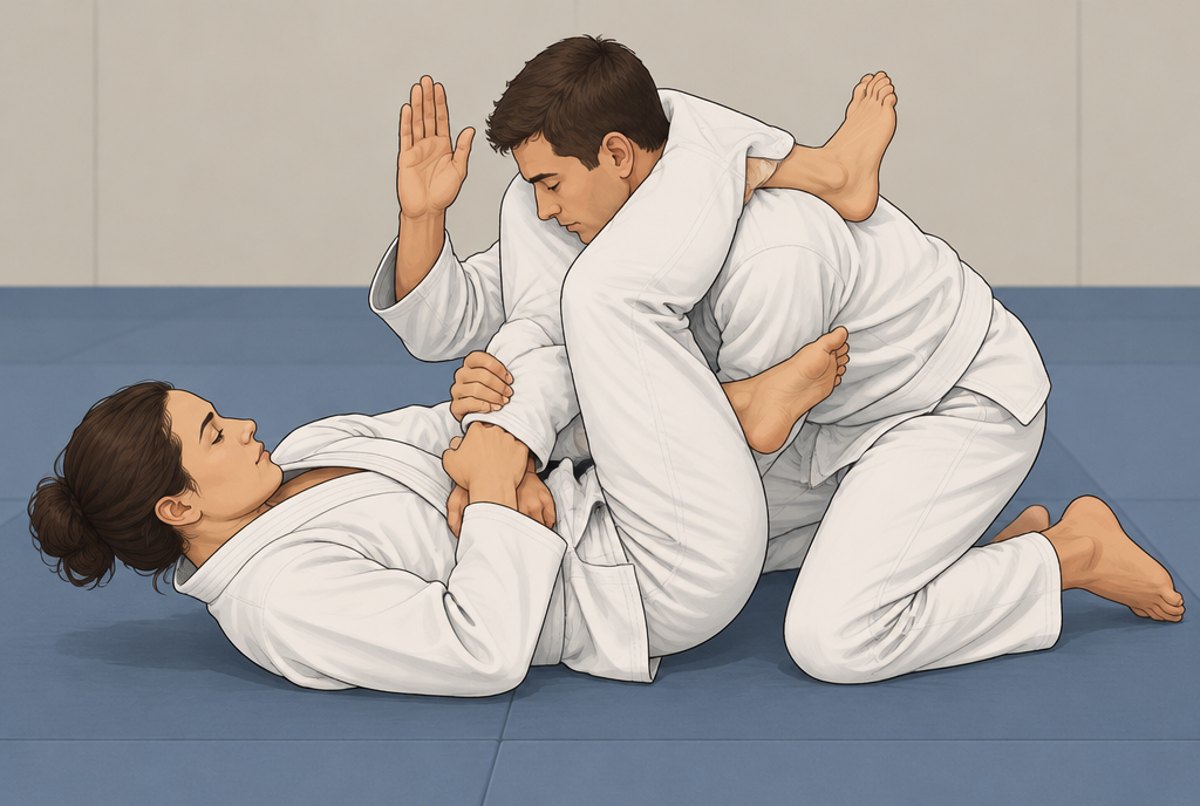
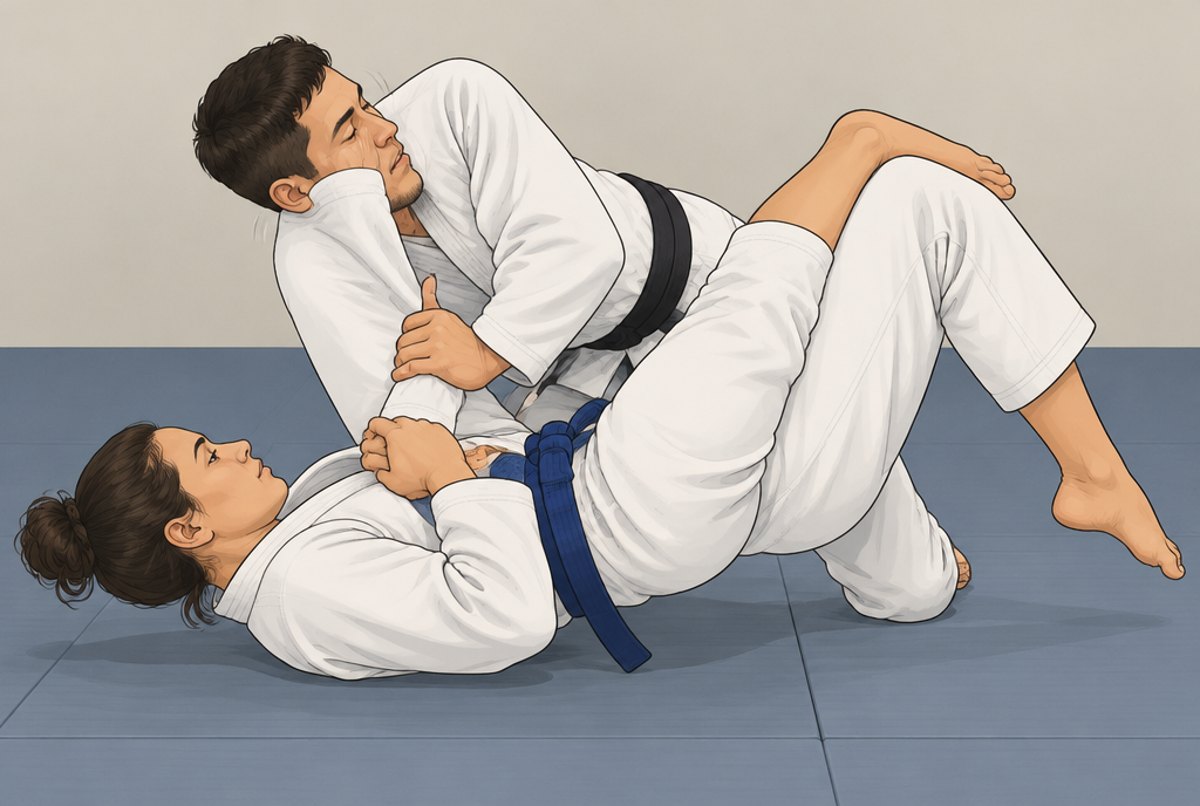
- , straightening the elbow against the hips; in judo juji-gatame. From guard, mount and elsewhere. 1,22
- , the bent arm lock, ude-garami, and the , the reverse bent arm lock, named after Masahiko Kimura, who beat Hélio Gracie with it in 1951. 6,22
- , a shoulder lock using the legs. 1,43
- . 1,43
- Leg locks: the , , , calf slicer, and the , which twists the foot and puts severe twisting force on the knee. Heel hooks are usually banned in gi competition because they can cause lasting knee damage. 1,22
- Compression locks, a , crush a muscle against a bone, for example the biceps slicer and calf slicer; they are restricted to higher belts. 1,43
- A or spine lock without a choke is banned in every IBJJF division. 1,43
Which holds are illegal for children and lower belts
IBJJF Rules Book version 6.1, June 2024, current on 26 October 2026 43,45
The IBJJF bans 26 techniques by age and belt.
| Division | Allowed, beyond the basic chokes and arm locks | Still banned |
|---|---|---|
| 4 to 12 years | None of the 26 listed techniques | All 26, including the , Ezekiel, front guillotine, omoplata, triangle while pulling the head, arm triangle, straight ankle lock and wrist lock |
| 13 to 15 years | Leg stretching submissions only | The rest, including the chokes and locks above |
| 16 and 17, all belts, and adult white belts | Adds: choke with spinal lock, straight ankle lock, Ezekiel, front guillotine, omoplata, triangle pulling the head, arm triangle | Wrist locks; locks squeezing the kidneys or ribs from closed guard; slicers; kneebars; toe holds; heel hooks; all knee twisting locks; ; slams; and the rest below |
| Adult and masters blue and purple belts | Adds: wrist locks, the kidney or rib compression lock from closed guard, the single leg with the head outside | Biceps and calf slicers, kneebars, toe holds, turning the wrong way in a straight ankle lock, heel hooks, knee twisting locks, knee reaping |
| Brown and black belts, gi, and masters brown and black in no gi | Adds: biceps and calf slicers, kneebars, toe holds, turning in a straight ankle lock | Heel hooks, knee twisting locks, knee reaping, outward pressure in a toe hold |
| Adult brown and black belts, no gi | Adds: heel hooks, knee twisting locks, knee reaping, outward toe hold | Only the six always banned |
| Every division | Slams, spine locks without a choke, the scissor takedown, bending fingers back, throwing an opponent on their head by the belt when defending a single leg, suplexes onto the head or neck |
Other IBJJF safety rules for young athletes: jumping guard is a foul under 15 and for all white belts; referees in under 12 matches must stand behind a child who is lifted off the mat in a triangle or closed guard, to protect the spine; and under 15s are disqualified only at the sixth penalty rather than the fourth. 43
AJP Rule Book of 25 August 2026 50
The AJP's table lists the same 26 techniques in the same six columns, with the same pattern of bans. Its third column is printed as "14 & 17 years old (all ranks) and white belts", where the IBJJF says 16 and 17; this looks like a misprint but is not confirmed. 50
JJIF ne-waza, version 2.8.1, October 2026 65
The JJIF uses age groups and belt divisions. Under 12 and below: all 26 banned. Under 14 and under 16: only the leg stretch allowed. White belts from under 18 upwards: chokes and arm locks allowed, including the rib and kidney compression lock that the IBJJF bans for white belts; wrist locks banned. Blue and purple: add wrist locks, the single leg with the head outside, and jumping guard. Brown and black in gi, and masters in no gi: add slicers, kneebars, toe holds and turning ankle locks. Adults in no gi: add heel hooks, knee twisting locks, knee reaping with detailed limits, and the reverse toe hold. Slams, neck cranks without a choke, the scissor takedown, finger bending and head spiking are banned for everyone. 65
ADCC, rules as archived on 13 October 2026 60
Professionals may use any choke except closing the windpipe with the hand, any arm, shoulder or wrist lock and any leg or ankle lock; slamming is allowed only to escape a locked submission. Beginners and children may not use heel hooks, knee twisting foot locks, toe holds, kneebars, calf or biceps locks, spine twisters, the banana split, neck cranks, crossface holds or any slam. ADCC also bans the full nelson and every kind of crucifix at all levels. 60
What this means for parents
Competition rules set what children may use at events; whether an academy applies the same limits in its children's training is up to the academy. The UKBJJA tells coaches to make sure beginners know the foul techniques, such as grabbing fingers or putting fingers in the mouth or eyes, from the first class, and to teach them about the danger of slams. 86 Ask the academy which rules its children's classes follow.